FIMS News
Contact Information
FIMS Communications
Becky Blue
Email
519-661-2111x88493
FIMS & Nursing Building
Rm 2060C
Saying farewell: 2025 full-time faculty retirements
June 2025
The FIMS community is saying goodbye to three long-time faculty members this month. Associate Professors Grant Campbell and James Compton, and Professor Nick Dyer-Witheford have each been with FIMS for over 20 years and all have contributed enormously to the FIMS we know today. It is with great sadness, but also great gratitude, that we bid goodbye to Professors Campbell, Compton and Dyer-Witheford. We wish them all the best on their next adventures.
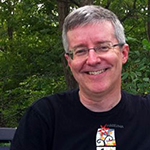 Grant Campbell arrived at FIMS in 1998, joining the barely formed faculty in some of its earliest days. As a scholar in the field of library and information science, Campbell played a vital role in envisioning how information science would more broadly fit into the new undergraduate program in Media, Information & Technoculture (MIT). Throughout his career, Campbell taught MIT students in courses like Planet Google: Big Data and Information Society, Next Generation Web, and Search and Discovery. In the Library and Information Science graduate programs, he is a specialist in Information, Organization, Curation and Access, and Descriptive Cataloguing Theory and Practice. He is internationally renowned for his research in knowledge organization, though he later branched out to study how information organization and access could be adapted to help communicate with patients with dementia. Professor Campbell has been a trusted and reliable colleague for many years and we will miss his good sense, humour and generous spirit, along with the sight of him arriving to meetings carrying his elegant tea tray.
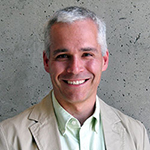 James Compton started at FIMS in 2002, arriving to teach in the journalism program but also part of an infusion of faculty expertise in the political economy of media, communication and culture. Compton has taught across programs, leading classes in the MIT, MA and PhD Media Studies, and MA Journalism programs. An ardent supporter of labour causes and a defender of academic freedom and shared governance, Compton is a former president of the Canadian Association of University Teachers (CAUT), a former president of Western’s faculty union UWOFA, and he has sat on Western’s Senate. In the two years leading up to retirement, Professor Compton held the FIMS Rogers Chair in Journalism and New Information Technology and organized a lecture series focused on “Communicating Solidarity in an Unstable World.” The four public events saw a range of speakers and scholars, culminating in a lecture from Nancy Fraser, American Critical Theorist of The New School for Social Research (New York). Professor Compton will be missed for his academic principle and his advocacy for governance and labour policy that benefits the many rather than the few.
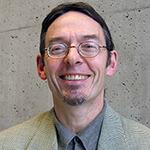 Nick Dyer-Witheford is a FIMS original, arriving at the faculty’s inception in 1997 and charged with helping to shape the new undergraduate Media, Information & Technoculture (MIT) program. Working with new colleagues like Tim Blackmore, Carol Farber, Grant Campbell and others, Dyer-Witheford played a key role in shaping the MIT program into something that was, at the time, unique among media studies programs in Canada. Dyer-Witheford would later serve as Associate Dean and Acting Dean, and he has continued to play a role in the evolution of FIMS curriculum up to present day. Professor Dyer-Witheford has also been a prolific supervisor, overseeing the work of more than 20 PhD and master’s students in both Media Studies and Library and Information Science, and an equally prolific author. His seminal text, Cyber-Marx: Cycles and circuits of struggle in high technology capitalism (1999) just marked 25 years, and fittingly, it was celebrated with the release of his eighth book, Cybernetic Circulation Complex: Big Tech and Planetary Crisis. Professor Dyer-Witheford will retire having made critical contributions to both his field of study and to FIMS. He will be missed for his steadying presence, sharp insight, and his passion for the project that is FIMS.
The faculty will not be the same without these three contributors, and the FIMS community will feel their absence keenly. Though it is bittersweet, we wish them all the best in retirement and hope they know that they will always have a place here.