

Search Website
Elizabeth St. Philip appointed as the 2027 FIMS Asper Fellow
By Becky Blue
It was during the COVID-19 pandemic in 2020-2021, when Elizabeth St. Philip was a Senior Health Producer for CTV News, that she realized the magnitude of the problem facing both journalists who were working to provide the public with reliable information, and audiences who were desperate for answers to their anxieties.
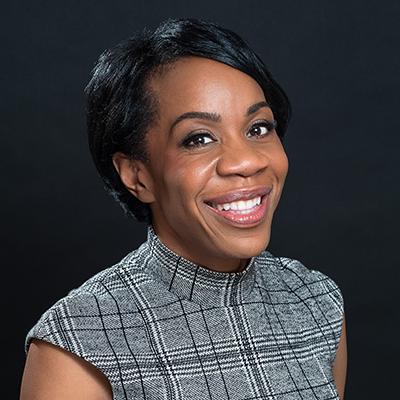
“There was so much we didn't know. Scientific understanding was evolving, and medical advice was changing. It was a real challenge to stay on top of new information. I saw in real time how fast and far wrong information could spread. I wanted to do more as a journalist to fight it,” she says.
Much of her professional time post-CTV has been spent exploring the now ever-present problem of misinformation and disinformation and gaining expertise in how to verify what you see, hear and read in media. As the newly appointed 2027 FIMS Asper Fellow in Media, St. Philip will have chance to pass that knowledge on to journalism and communications students preparing to enter industries in which knowing what’s real and factual has become critical.
The award-winning St. Philip will teach a graduate-level course for Master of Media in Journalism and Communication (MMJC) students titled Prove It: Verification and Investigative Storytelling. Students of this age may have grown up surrounded by tech, but rapid advances in technology like generative AI in recent years has put even the most knowledgeable experts on their heels.
“I’m a journalist with over 25 years of experience and I still find it challenging to determine what's real and what's not. With the course I want to teach students how to verify questionable claims quickly and get their stories out to the public before bad information spreads too far,” she says.
St. Philip’s expertise comes partly from her role executive-producing the TVO series Big [If True] in 2025 and 2026, a show that tracked and exposed misinformation, disinformation, conspiracies and scams to teach the public what to watch for. But she also has an extensive background in current affairs, investigative journalism and documentary-making throughout her career, including a 20-year stint as a producer for CTV National News, where she regularly produced stories for W5.
She plans to have her students test-run some of the tools being used by rapid response verification teams in newsrooms like reverse image searches, satellite data, internet archives, public databases. Students will hear from working journalists to learn more about their methods.
While the students are tackling misinformation and disinformation on a broad scale, St. Philip will also look at the problem in a narrower context. Along with teaching, Asper Fellows are expected to conduct new research on a topic of personal and public interest. St. Philip wants to explore how misinformation spreads in diaspora communities through private messaging platforms like WhatsApp, Telegram and WeChat.
In these cases, she explains, “false information, like misleading health warnings, election rumours, or AI-cloned voice notes, may be shared by people you know and trust, (your mom, dad or auntie), and spread widely before the news media even knows it is circulating.”
The project will involve a series of interviews with Canadian and international researchers, journalists, editors, and everyday people in communities who have been impacted by the problem. To bring it all together, she plans to write a feature article on the topic.
It all has St. Philip excited to be back on a university campus, “exchanging ideas with students and faculty, and exploring a research project in depth, without the pressures of weekly news deadlines.”
She hopes the students who enroll in her class will learn practical skills that they can take with them into their professional careers and ideally share with friends and family, too.
For MMJC students considering a career in journalism, they will find themselves on the front lines of the battle against misinformation and disinformation. St. Philip plans to make sure they get there equipped with the skills and knowledge to succeed in a difficult environment.
“A journalist's job of informing the public about what is happening is getting much harder, and we need the next generation of journalists to be prepared for this new reality.”
For more information about the FIMS Asper Fellowship in Media, visit the FIMS website.