

Search Website
Surviving Memory project named finalist for SSHRC Impact Awards
By Becky Blue
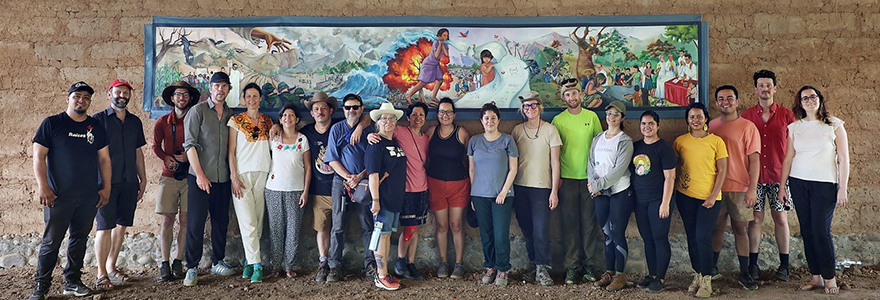
Professor Amanda Grzyb and the research team responsible for Surviving Memory in Postwar El Salvador have been named among the nine finalists for SSHRC’s 2026 Impact Awards. SSHRC regards the Impact Awards to be the most prestigious honour they bestow upon researchers in the social sciences and humanities, and this is the first time that Western has had a finalist in the competition.
The Surviving Memory in Postwar El Salvador project has been underway for over a decade, and is focused on community documentation, commemoration, testimony, economic reconstruction, environmental reparation, and healing related to the Salvadoran Civil War that took place from 1980-1991.
Dr. Amanda Grzyb, project director, FIMS professor, and founding member of Surviving Memory, says the team is deeply honoured to be named as a finalist for a SSHRC Impact Award.
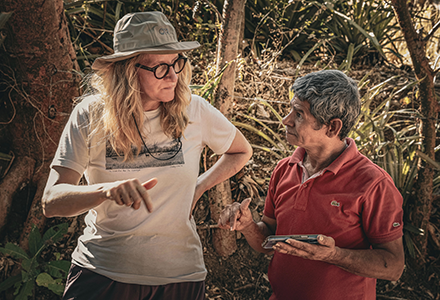
“This recognition belongs to an extraordinary international team of civil war survivors, community leaders, scholars, students, artists, architects, and activists who have worked together for more than a decade. What makes this partnership special is our shared commitment to building relationships of trust and solidarity across national, cultural, and disciplinary boundaries,” she says.
SSHRC Impact Awards are offered in three categories, including the Talent Award, the Insight Award, and the Partnership Award. The Surviving Memory in Postwar El Salvador team is a finalist in the Partnership category, which emphasises mutual cooperation, shared intellectual leadership and resources, and mentorship of the next generation of scholars.
“From the beginning, our goal has been to demonstrate that research can be both inclusive and transformative. Whether we are mapping massacres, co-creating memorials, documenting survivors’ testimonies, preserving historical archives, or supporting youth arts initiatives, our work is always guided by the priorities and aspirations of the communities with whom we collaborate,” says Grzyb.
The Surviving Memory project team includes hundred of active researchers, trainees, and community collaborators. And though the team is celebrating, they are also mourning the recent loss of a key contributor to the project and one of the six delegated nominees who submitted CVs for SSHRC’s nomination process. Dr. Harold Fallon, who Grzyb describes as “a brilliant architect, a professor at KU Leuven, spouse of Salvadoran-Belgian architect Evelia Macal Guerra, and a founding member of the Surviving Memory Initiative,” passed away from cancer this past July.
“As our team reflects on Surviving Memory’s projects over the last decade, he is always in the front of our minds,” says Grzyb.
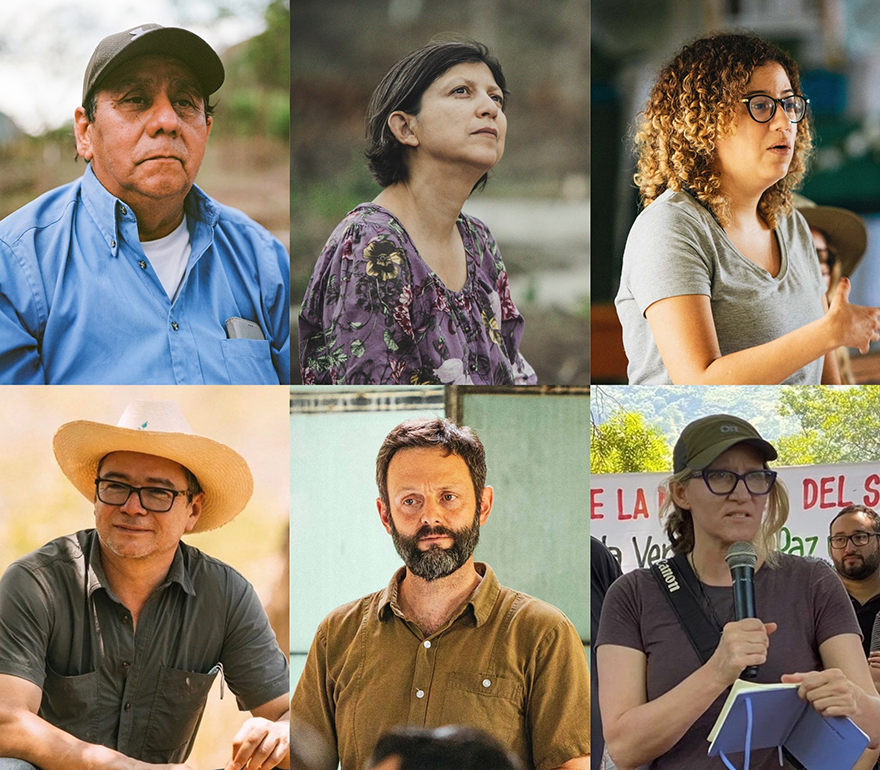
Six members of the Surviving Memory research team out of the hundreds involved. Top (L to R): Felipe Tobar, Evelia Macal Guerra, Adriana Alas. Bottom (L to R): Reynaldo Hernández, Harold Fallon, Amanda Grzyb - Photo by Shawn Robertson
Felipe Tobar, a community leader, massacre survivor, and founding member of Surviving Memory based in José Las Flores, Chalatenango, says that the difficulty of the work carried out by the research team is eased through collaboration and the solidarity of all those involved.
“The research work with Surviving Memory has been a privilege for me because the entire project has been carried out through collective discussion, consensus-based decision-making, and consultation with survivors in general assemblies. It has been deeply meaningful. The research reflects what survivors want, such as the Sumpul River Massacre Memorial, thanks to Amanda [Grzyb]’s team at Western University and the Belgian architects, Harold [Fallon] and Evelia [Macal Guerra],” he explains.
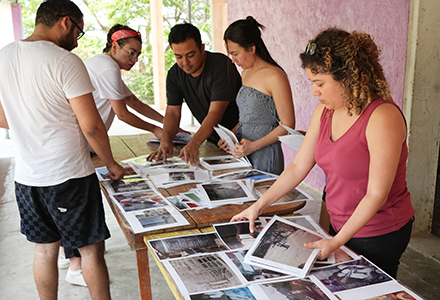
“An important part of our work has been documenting — primarily through video testimonies — what happened during the civil war, so people can learn what their parents, grandparents, brothers, and sisters experienced. The research has been demanding, but we deeply admire the dedication, spirit of sacrifice, and solidarity shown by those who stand alongside our survivors.”
The impact this work has on survivors is brought home by Reynaldo Hernández, another founding member of Surviving Memory, and a former refugee who migrated to Canada in 1991. His personal experiences with the Salvadoran civil war and its aftermath illustrate the significance of working directly with survivors to document, commemorate and record testimony about what happened to them.
“I lost four brothers due to the war. Two of them died during the war, one by execution and the other in combat. I lost the other two as a result of the trauma of the war: one died by suicide and the other found refuge in alcohol and died of alcohol poisoning. Participating in the Surviving Memory Project with this amazing team has been a form of healing for me. I feel empowered knowing that we are preserving this history and documenting it. I want to emphasize the power of solidarity, of working in a collaborative team where we focus on the priorities of the communities and where non-academics like myself can play in role in defining what research looks like, how it is conducted, and how it is shared with the world,” explains Hernández.
As a finalist in the Partnership Award category, the Surviving Memory project is in the company of two other outstanding projects: Concordia University’s project titled Thinking Through the Museum and McMaster University’s project titled Health, Productive Work. SSHRC will announce the winner in December 2026.
Regardless of whether they win, Dr. Adriana Alas, project coordinator and intergenerational survivor of the war who is based at Western University, explains that the impact of the Surviving Memory project goes well beyond a moment in time, and looks not just at what happened in the past. At its heart is communal care for survivors that looks both backwards and forwards.
“Surviving Memory in Postwar El Salvador's collaborative research gives me hope for the present and the future,” she says.
“It is research rooted in solidarity, not in competition or ego, but in a commitment to social justice and the right to live free of violence, acknowledging victims and survivors of Salvadoran Civil War.”