Media, Information & Technoculture

We live immersed in media, bombarded by information, experiencing perpetual technological change. These forces affect how we learn, do business, construct communities, and create culture. They change the ways we think, relate, and act.

As an MIT student, you will study the social, cultural, political, and economic dimensions of media, information, and technology. By thinking critically about means of communication from newspapers to the Internet, books to videogames, television to music, you will consider how our world is filtered by media, constructed from information, and altered by technology. You will become aware of how we are shaped and defined by the very media, information, and technology we ourselves create.

Few topics are as immediately relevant to our lives today as those you will study in MIT:

  • How do social networks like Facebook and MySpace change our identities and relationships?
  • Is our attachment to technology compromising our privacy or our freedom?
  • What is the role of gender in media coverage of celebrity culture?
  • Do violent videogames cause violent acts?
  • How does media ownership affect our access to news and information?

These are the types of questions you will examine in the MIT program.


Why Study Media, Information and Technoculture?


Current and Contemporary

Courses in MIT examine what is going on in the world around us today and explore the technocultural changes being discussed on a daily basis. Our goal is to produce graduates who are media and information technology savvy to meet the needs of the multi-media and information age.

Combination of Theory and Practice

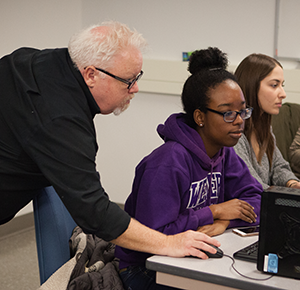
The MIT program was founded on the principle that the integration of theory and practice is the best way to learn. In addition to theoretical and critical approaches, you will learn how to use many of the new information, communication and learning technologies. Hands-on experience is available in many of our elective courses including digital imaging and web site design, digital music, database design, multi-media theory and production, and digital audio theory and production.

Fun

MIT gives you a chance to explore, think about and use communications technologies in new ways. Whether you are designing a web site or learning how to write effectively for the online world, MIT courses are challenging and fun.

Friendly and Enthusiastic Faculty

As a small undergraduate program, MIT is a closely-knit community of faculty, staff and students. The program encourages the development of strong relationships between students and members of the faculty and staff. There are many opportunities throughout the year for you to meet other students in the program and to take part in a wide variety of MIT Students' Council events.

Interdisciplinary Approach to Learning

MIT’s interdisciplinary approach creates opportunities for combining an interest in media and information technology with a wide variety of programs from the Faculties of Arts and Social Science at Western. We currently offer combinations with twenty other departments on main campus and the affiliated colleges. In addition to MIT course offerings, students may select courses from a variety of departments on campus.

As well as drawing on the expertise of the Journalism and Library and Information Science faculty, the MIT program also benefits from joint faculty appointments in such areas as Law, Computer Science, Visual Arts, Sociology, Music and Education.

Choice

We currently offer formal combinations with 20 other departments on main campus and the affiliated colleges. In addition to MIT course offerings, students may select courses from a recommended list of alternates from a variety of departments across campus.

Useful

By the time you’ve completed an MIT program, you will possess a marketable set of skills that can be applied in the workplace. MIT students graduate with a sound theoretical understanding of the place of media in society, polished writing skills, team approaches to working, technical aptitude, excellent listening and communications skills, ability to think critically and to solve problems and be creative. Our goal is to meet the growing demand for graduates who write well, understand media and can effectively use information technology and products.

Internship Possibilities

In order to link the world of academic study and the off-campus world, MIT offers students the opportunity to take part in Professional and Academic Internships. Professional Internships are paid placements with a media or information-related component, usually completed over the summer. Academic Internships consist of unpaid placements completed under Faculty supervision for academic credit.